Setting Up Your Decoy Spread for Maximum Success
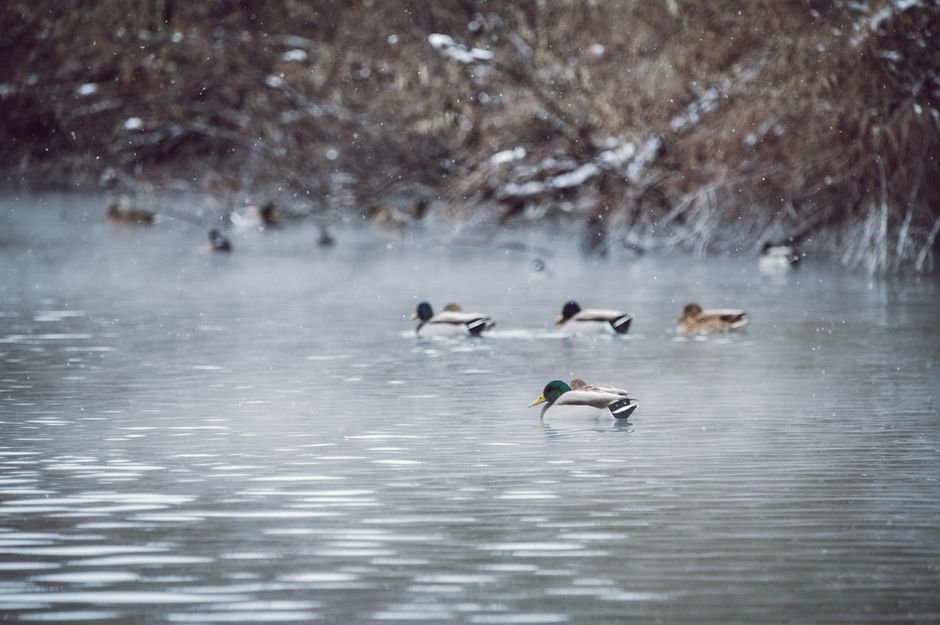
The arrangement of your decoys is just as important as the decoys themselves. A poorly positioned spread will underperform regardless of decoy quality, while a well-thought-out layout maximises your chances of success.
Basic Spread Patterns include the J-hook, U-shape, and scattered formation. The J-hook works well in rivers and narrow water bodies, with decoys curving naturally with the water's flow. U-shaped spreads are versatile and effective on larger ponds, creating a natural gathering point. Scattered formations work best when mimicking relaxed, feeding ducks rather than a tight group.
Wind Direction is crucial because ducks prefer landing into the wind. Position your spread so incoming birds will land upwind of your hide. This natural approach vector puts them in optimal shooting range. Always check wind direction before setting up and adjust accordingly.
Shooting Position must be carefully concealed but positioned to cover the approach routes. Place your hide where you have clear sightlines to likely landing zones. Avoid positioning yourself directly in line with the wind approach; instead, set up slightly to the side for better shooting angles.
Spacing Between Decoys should reflect natural behaviour. Tightly grouped decoys suggest a feeding flock, while loose spacing indicates relaxed, settled birds. Generally, space decoys about one metre apart, increasing distance for larger spreads on bigger water bodies.
Anchor Points keep decoys in position during wind and water movement. Quality anchors prevent your spread from drifting or bunching up. Weighted anchors work better than rope in windy conditions, as they maintain individual decoy position more effectively.
Realistic Movement can be achieved with a few key techniques. Ripple decoys or motion attachments can add subtle movement that catches attention. However, avoid excessive movement, which can appear unnatural and deter approaching birds. Less is often more with movement.
Water Clarity affects how birds perceive your spread from above. In clear water, decoys appear more realistic from a distance. In murky water, slightly exaggerated markings and larger spreads work better to maintain visibility.
Practice setting up and breaking down your spread regularly. Speed and efficiency matter when conditions change, and experience helps you adjust quickly to wind shifts or bird behaviour patterns.